
Sometimes traditional therapy just doesn't hit the mark. Maybe you've tried it and felt disconnected from your therapist, or perhaps the clinical setting feels too formal for where you're at right now. If you're nodding along, you're definitely not alone – and there's good news. Altoona has a growing network of peer support options that might be exactly what you need.
Why Traditional Therapy Sometimes Falls Short
Let's be real – therapy isn't a magic fix for everyone. Some folks find it hard to open up to someone who's never walked in their shoes. Others feel overwhelmed by the clinical approach or can't connect with the traditional patient-provider dynamic. Maybe you've been on waiting lists for months, or the cost is just too much to handle right now.
Here's the thing: struggling with traditional therapy doesn't mean you're broken or that you don't want to get better. It might just mean you need a different kind of support – one that feels more authentic and relatable.
What Makes Peer Support Different
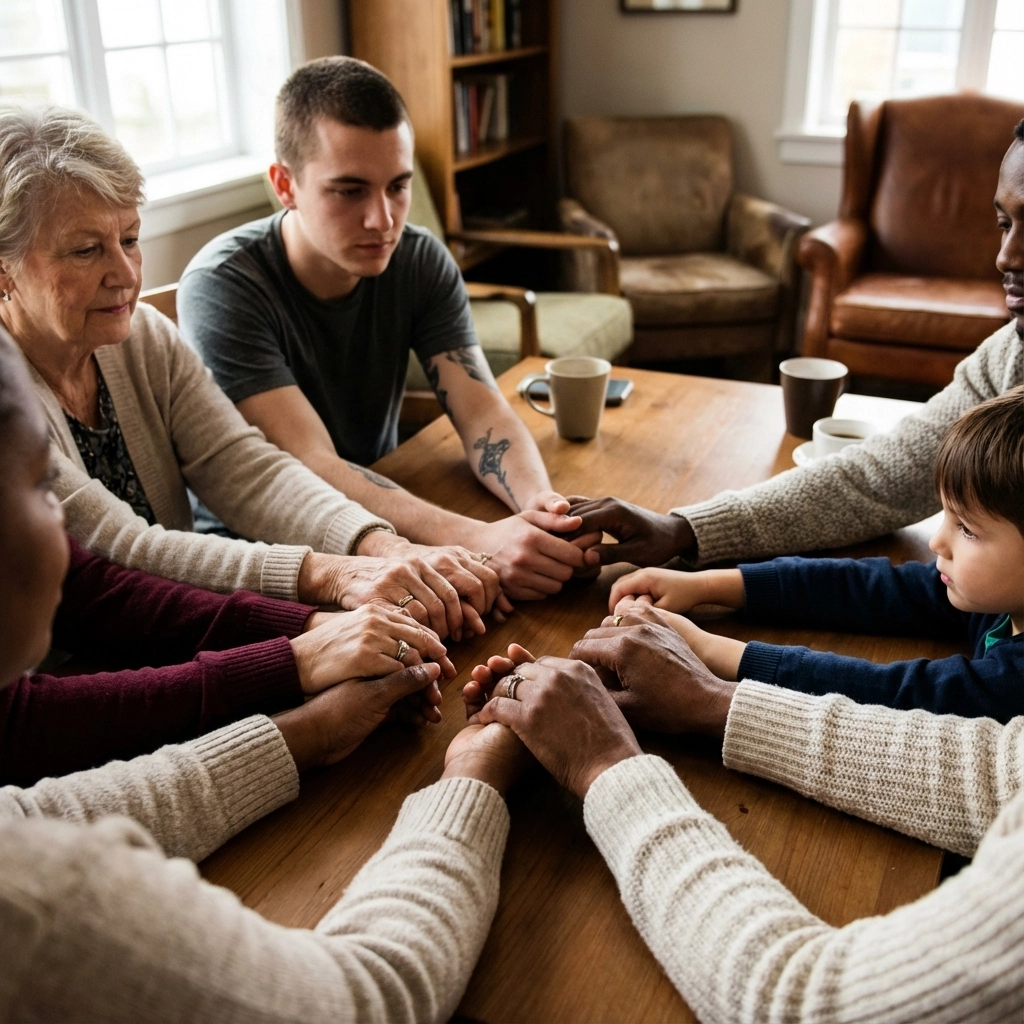
Peer support flips the script on traditional mental health care. Instead of sitting across from someone with a degree on the wall (though those folks are great too!), you're connecting with people who've actually been there. They've faced similar struggles, celebrated similar victories, and understand the journey in a way that only lived experience can provide.
The beauty of peer support lies in its authenticity. When someone shares how they dealt with anxiety, addiction, grief, or any other challenge, you're not getting textbook advice – you're getting real-world strategies that actually worked for real people. There's no judgment, no clipboard, and no copay required in most cases.
At Hope Drop In, we see firsthand how powerful these connections can be. People often tell us that finally meeting others who "get it" was the turning point in their recovery journey.
Peer Support Options Right Here in Altoona
Good news – Altoona has more peer support resources than you might think. Let's break down what's available:
NAMI Blair County – Your Mental Health Community
The National Alliance on Mental Illness (NAMI) Blair County offers several peer-led programs that are completely free. Their NAMI Connection support groups meet regularly and provide both structured and casual support environments. What makes these special is that they're led by people who've navigated their own mental health challenges.
They also run Peer-to-Peer, an 8-week program that's like a crash course in recovery, taught by people who've been through it themselves. It's practical, supportive, and gives you tools you can actually use.
The Healing Patch – Grief Support That Gets It
If you're dealing with loss, The Healing Patch offers something unique. This isn't your typical grief counseling – it's peer support specifically designed for children and families who've experienced the death of someone important to them.
They meet twice monthly on Tuesday or Wednesday evenings from 6:30 to 8:00 pm at 20 Sheraton Drive. Kids get age-appropriate support through art, drama, and storytelling, while adults meet separately to share experiences and coping strategies. The best part? It's completely free, and you can reach them at 1-800-445-6262.
Evolution Counseling Services – Specialized Community Support
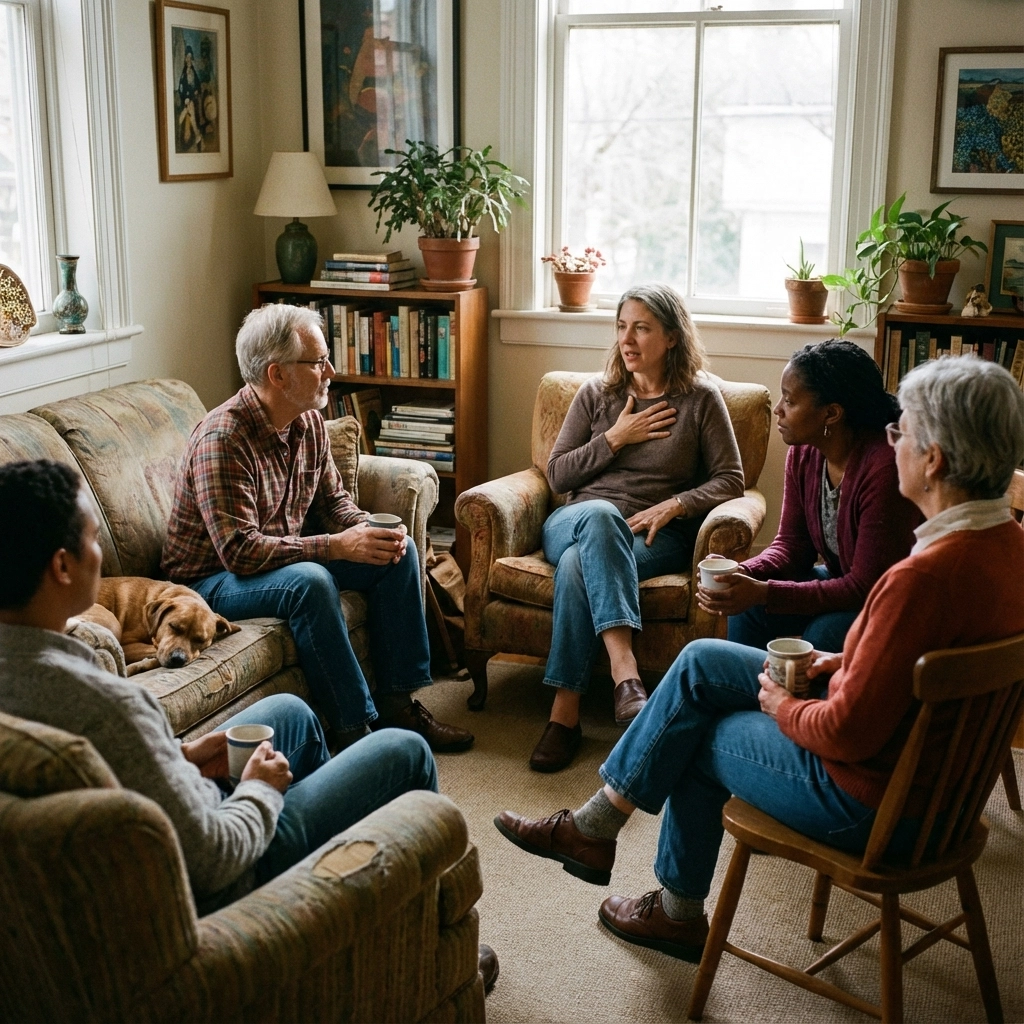
Evolution Counseling Services runs two standout peer support programs. ALLIES is a monthly support group for LGBTQI+ youth and families, creating a safe space for connection and empowerment. If you or someone you love is part of the LGBTQI+ community, having people who understand those specific challenges can be life-changing.
They also offer SOS, a peer support program for people dealing with substance use disorders. Located at 801 S. Kettle Street, it's another option for connecting with others who understand the unique challenges of addiction and recovery.
Penn State Altoona – Family Support
Sometimes it's not just about your own struggles – sometimes you're watching someone you love go through a tough time. Penn State Altoona offers a Family and Friends Peer Support Group specifically for people whose loved ones are struggling with alcohol or drug problems. It's a reminder that you don't have to navigate this alone, even when you're the support person.
How to Find the Right Group for You
With all these options, how do you choose? Start by thinking about what you're dealing with right now. Are you grieving a loss? Struggling with anxiety or depression? Supporting a loved one through addiction? Looking for LGBTQI+ affirming community?
Most of these groups welcome newcomers without a lot of paperwork or prerequisites. A simple phone call usually gets you all the information you need about meeting times, locations, and what to expect. Don't overthink it – sometimes the best way to find out if a group is right for you is just to show up.
Making the Most of Peer Support
Here's what we've learned works best: come as you are, but come ready to participate. Peer support thrives on shared experiences, so the more you put in, the more you'll get out. That doesn't mean you have to spill your life story on day one – just be open to listening and sharing when you're ready.
Consistency matters too. Unlike traditional therapy where you might see results after a few sessions, peer support often works best when you stick with it. Relationships take time to build, and trust develops gradually.
Also, remember that peer support isn't about fixing each other – it's about supporting each other. You're not there to give advice (unless asked) or solve problems. Sometimes the most powerful thing you can do is simply say, "I've been there too, and you're not alone."
When to Combine Approaches
Here's something important: peer support and traditional therapy aren't mutually exclusive. Many people find that combining both gives them the best of both worlds – professional guidance plus authentic community support.
If you're in crisis or dealing with severe symptoms, definitely reach out to a mental health professional. Peer support is incredible for ongoing community and understanding, but it's not a replacement for clinical care when that's what you need.
At Hope Drop In, we often help people navigate these different options. Sometimes someone starts with us for peer support and later connects with traditional therapy. Other times, people come to us after therapy to find their community. There's no wrong way to do it.

Taking the First Step
If you're reading this and thinking, "This sounds like what I need, but I'm nervous about trying something new," that's totally normal. Walking into any new group can feel intimidating, especially when you're already struggling.
Here's a practical tip: call first. Most groups are happy to talk you through what to expect, answer questions, and help you feel more comfortable about that first visit. Some even offer to pair you with someone who's been in the group for a while.
You can also start small. Check out our resources page for more information about local support options, or contact us directly if you want to talk through what might be the best fit for your situation.
Your Support Network Is Out There
The truth is, healing rarely happens in isolation. While traditional therapy works wonders for many people, it's not the only path forward. Peer support offers something different – authentic connection with people who truly understand your experience.
Altoona might be a smaller city, but it has a heart for supporting its community members through tough times. Whether you're dealing with loss, mental health challenges, addiction, family struggles, or just need to find your people, there are groups here ready to welcome you.
Your journey toward better mental health doesn't have to follow anyone else's playbook. It just has to work for you. And sometimes, the most powerful healing happens when you realize you're not alone in this fight.
Ready to explore your options? Start with one phone call, one group, one step forward. Your community is waiting for you.
Leave a Reply